Blog
Crypto tax guides, portfolio tracking tips, and product updates.
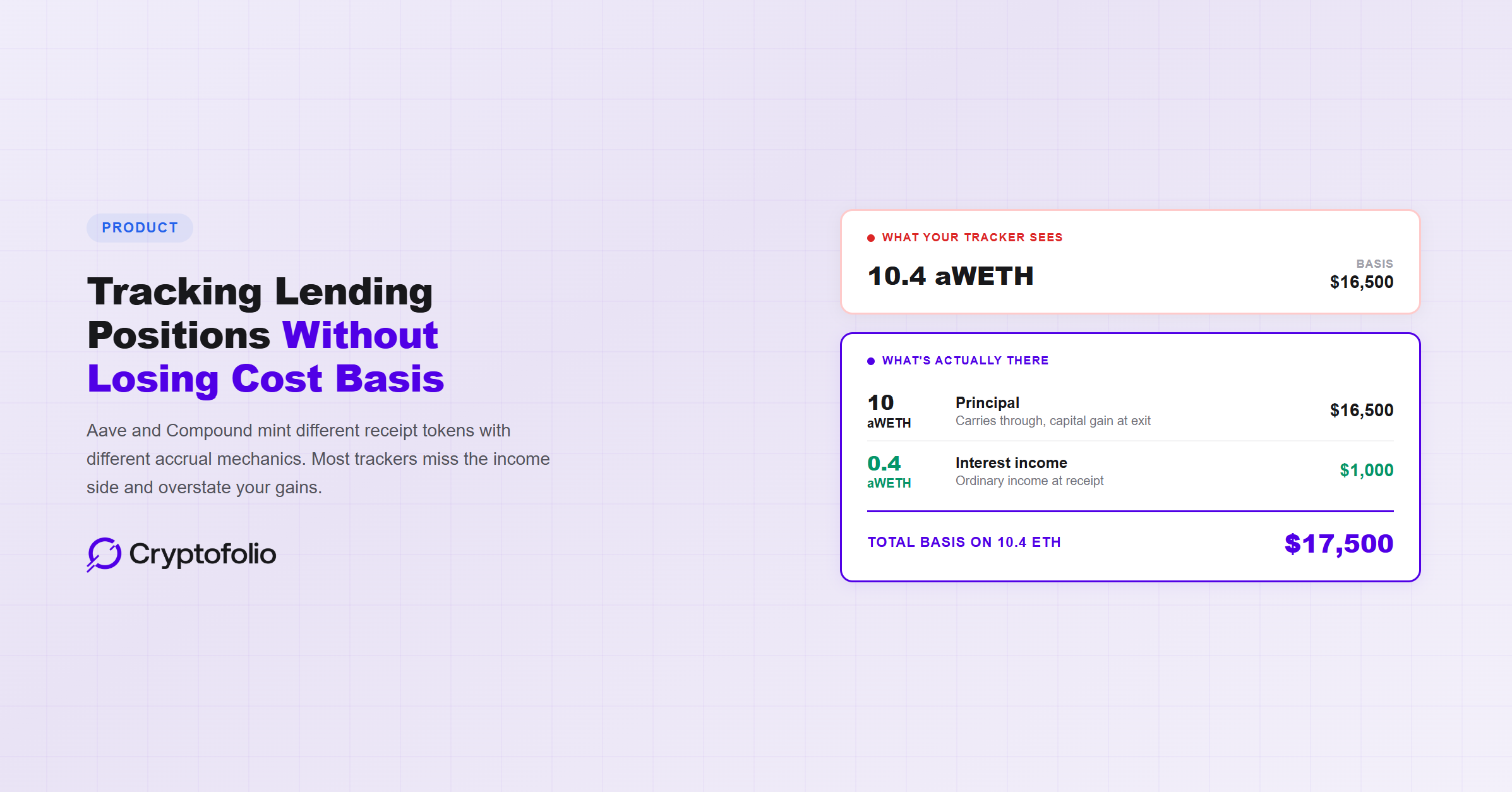
Tracking Aave, Compound, and Lending Positions Without Losing Cost Basis
Aave V3 aTokens rebase, Compound V2 cTokens don't, Compound III has no token at all, and Aave V4 just changed everything. Here's what most trackers get wrong about your cost basis on lending positions.
Read more →
What Most Trackers Get Wrong About Liquidity Pool Positions
Your liquidity pool position has four numbers most trackers collapse into one. Here's what they miss about LP tokens, impermanent loss, and accrued fees, and what it costs you.
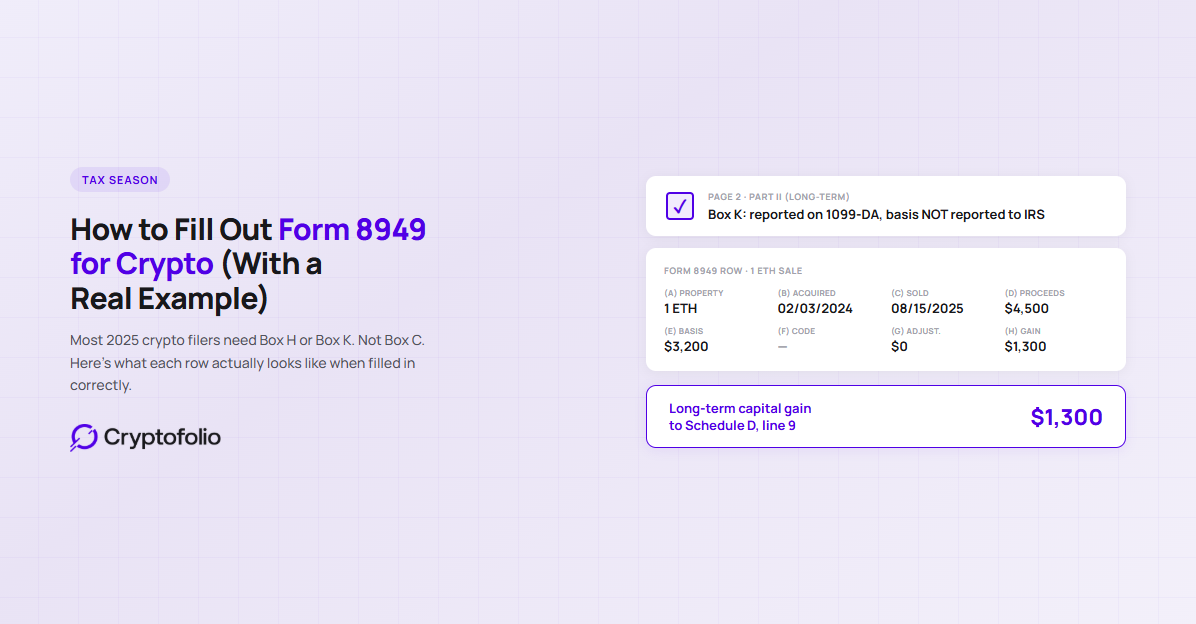
How to Fill Out Form 8949 for Crypto (With a Real Example)
A step-by-step worked example of Form 8949 for crypto in 2025. Covers the new digital asset checkboxes G/H/I/J/K/L, every column, and the three most common errors.
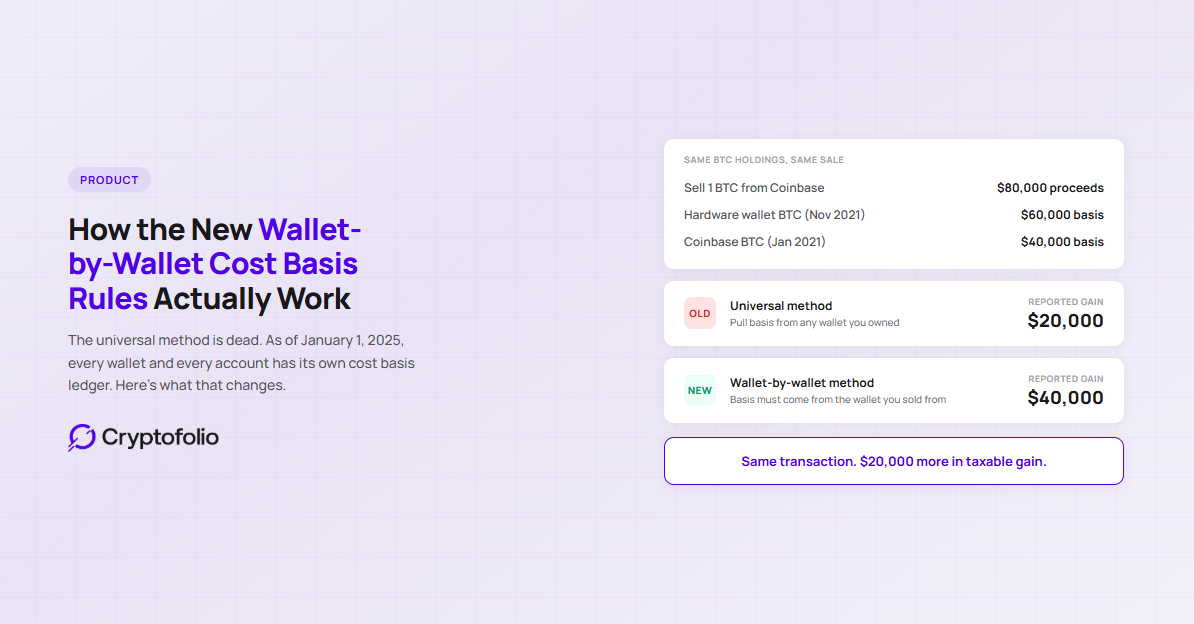
How the New Wallet-by-Wallet Cost Basis Rules Actually Work
As of January 1, 2025, crypto cost basis is tracked per wallet, not universally. Learn how the new rules work, why FIFO is the default, and where trackers fail.
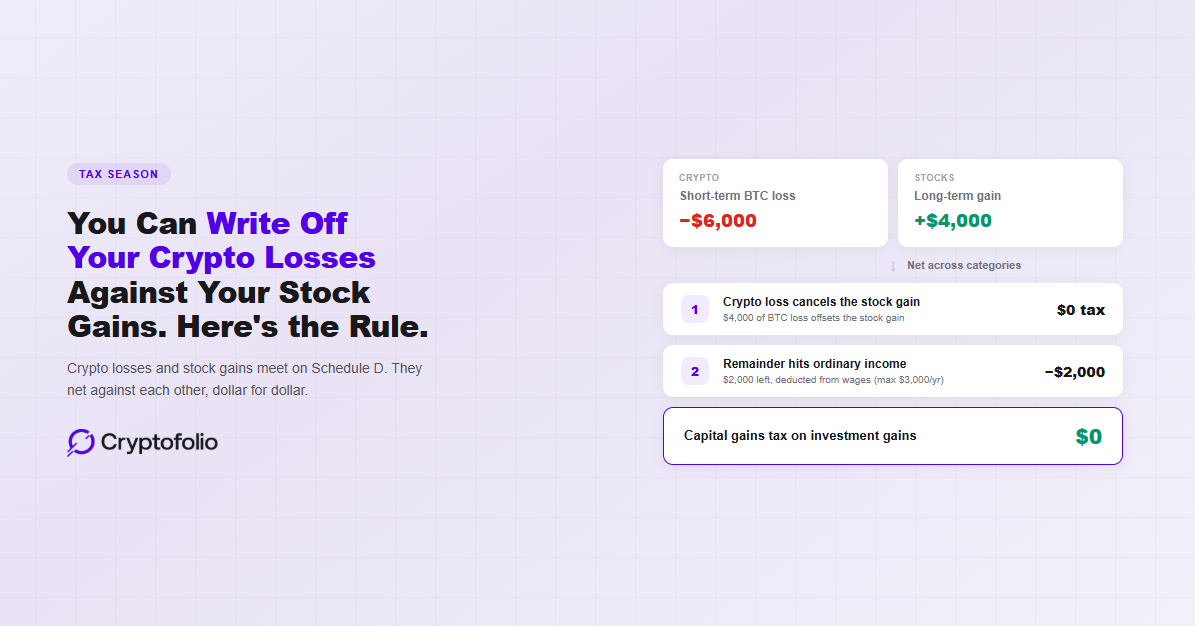
You Can Write Off Your Crypto Losses Against Your Stock Gains. Here's the Rule.
Yes, crypto losses offset stock gains dollar for dollar. Learn the netting order, the $3,000 deduction, wash sale quirks, and the PARITY Act risk in 2026.
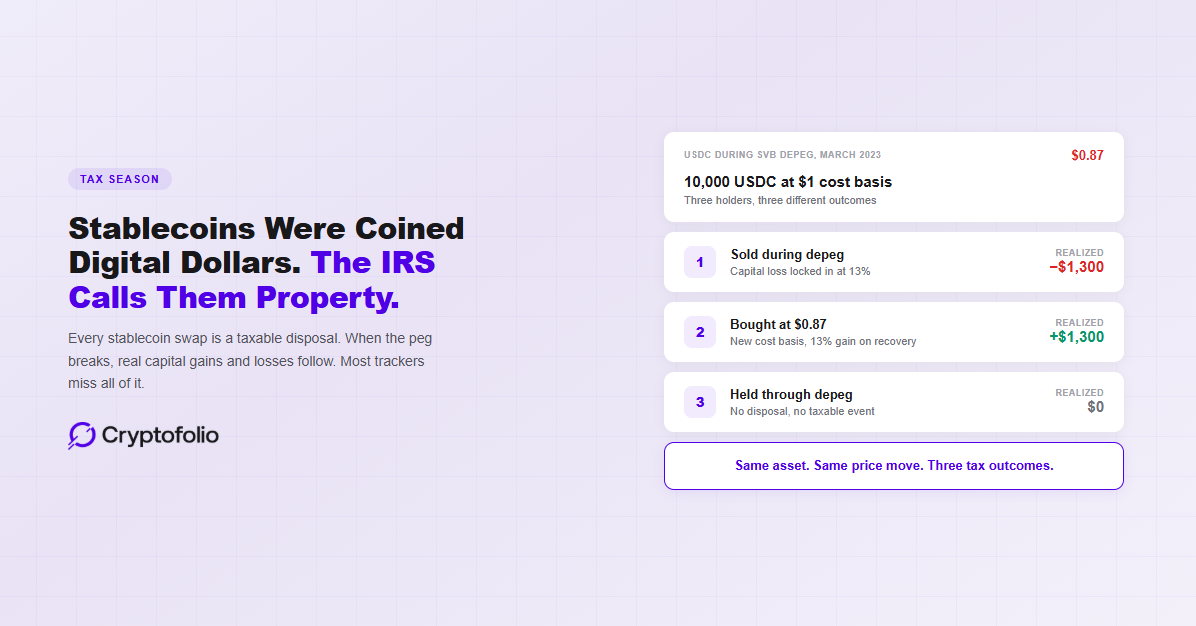
Stablecoins Were Coined Digital Dollars. The IRS Calls Them Property.
Stablecoins are property under IRS rules. Every USDC swap is a disposal. Learn how depegs, worthlessness rules after OBBBA, and the PARITY Act affect your taxes.
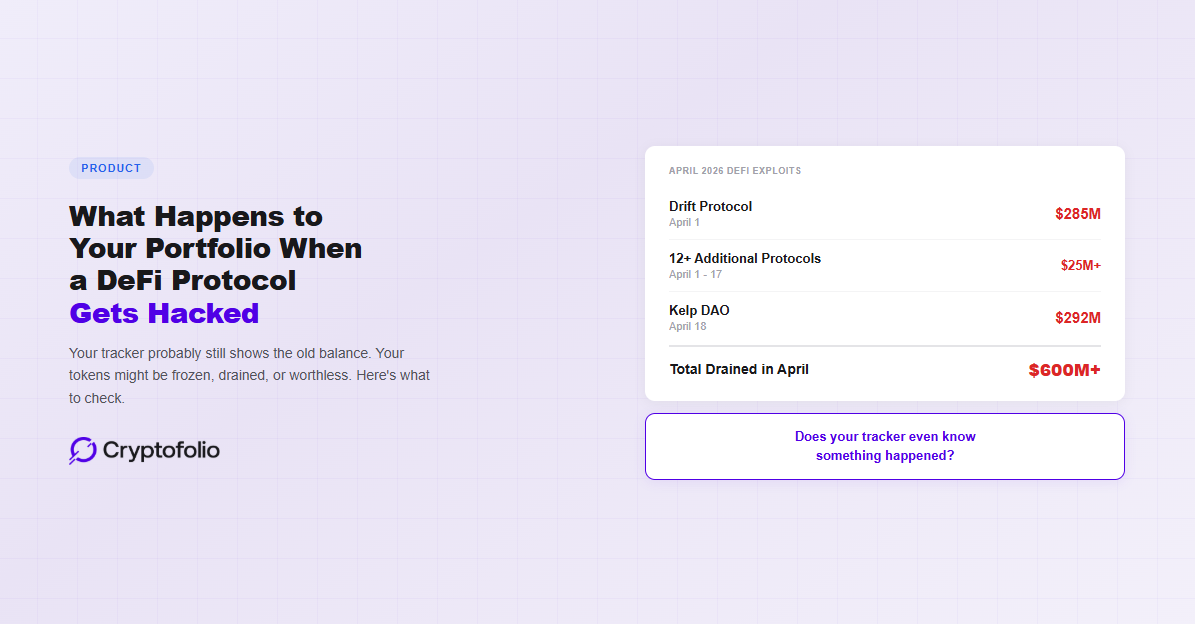
What Happens to Your Portfolio When a DeFi Protocol Gets Hacked
Drift lost $285M. Kelp DAO lost $292M. When a DeFi protocol you use gets exploited, your tracker probably still shows the old balance. Here's what actually happens to your tokens, your cost basis, and your tax position.
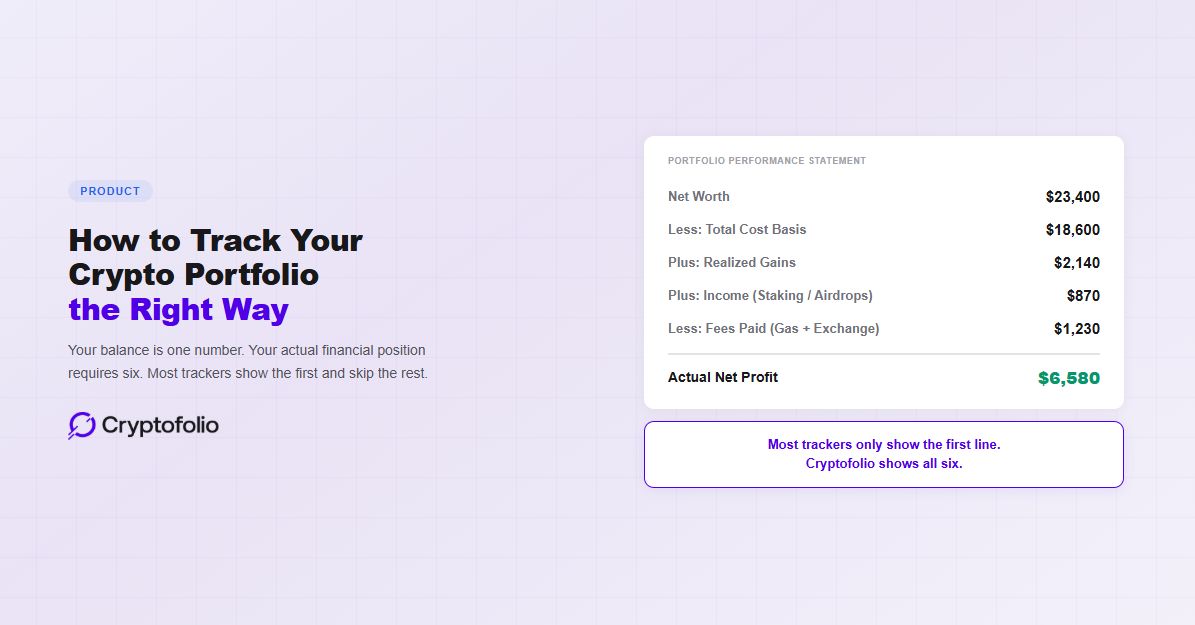
How to Track Your Crypto Portfolio the Right Way
Most portfolio trackers show your balance and call it tracking. Real tracking means knowing what you paid, what you made, and what you owe. Here's what to connect, what to check, and how to tell if your numbers are actually right.

Why Your Crypto Tracker Knows Too Much About You
CoinStats lost $2.2M from hosted wallets. Coinbase leaked 69,000 users' personal data. Your portfolio tracker doesn't need private keys, withdrawal access, or your real name. Here's what it actually needs.
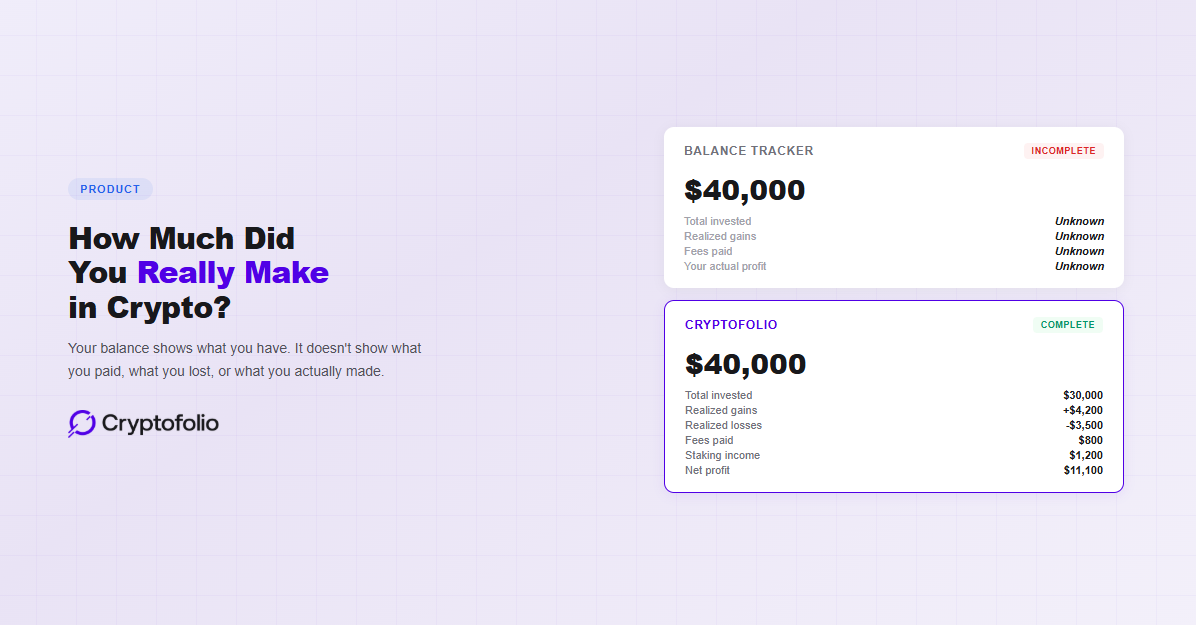
How Much Did You Really Make in Crypto?
Your portfolio app shows your balance. It doesn't show what you paid, what you lost, or what you actually made. Here's why the number on your screen is wrong and what it takes to calculate the real one.
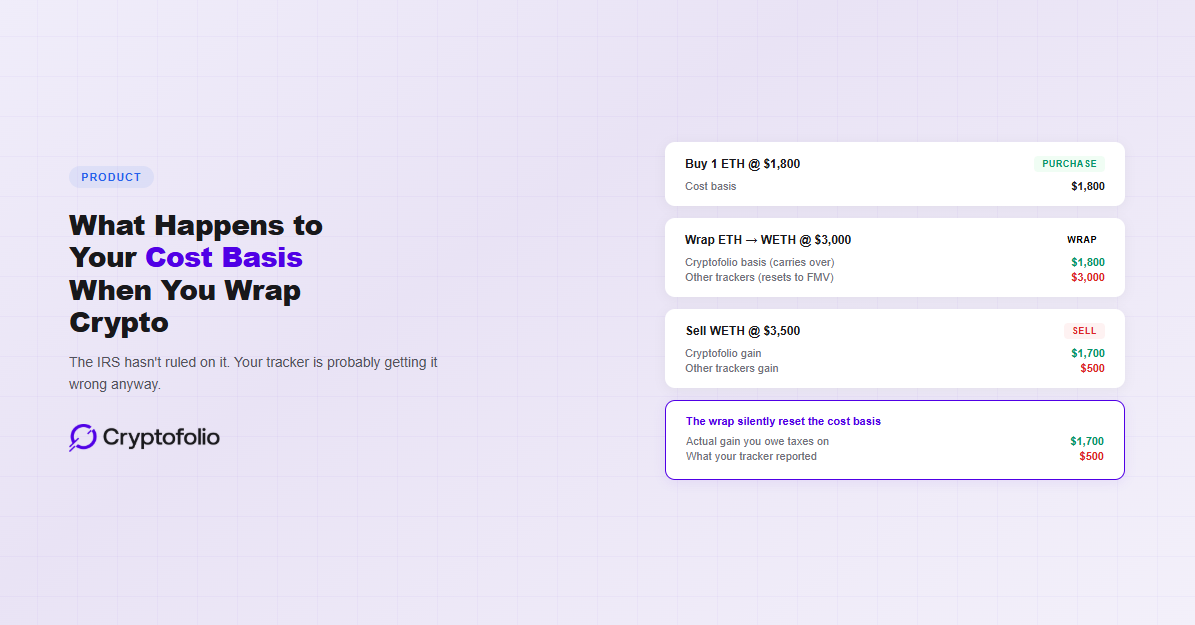
What Happens to Your Cost Basis When You Wrap Crypto
Wrapping ETH to WETH or BTC to WBTC may or may not be a taxable event. The IRS hasn't ruled on it. Here's how both positions work, what happens to your cost basis either way, and why your tracker probably gets it wrong.
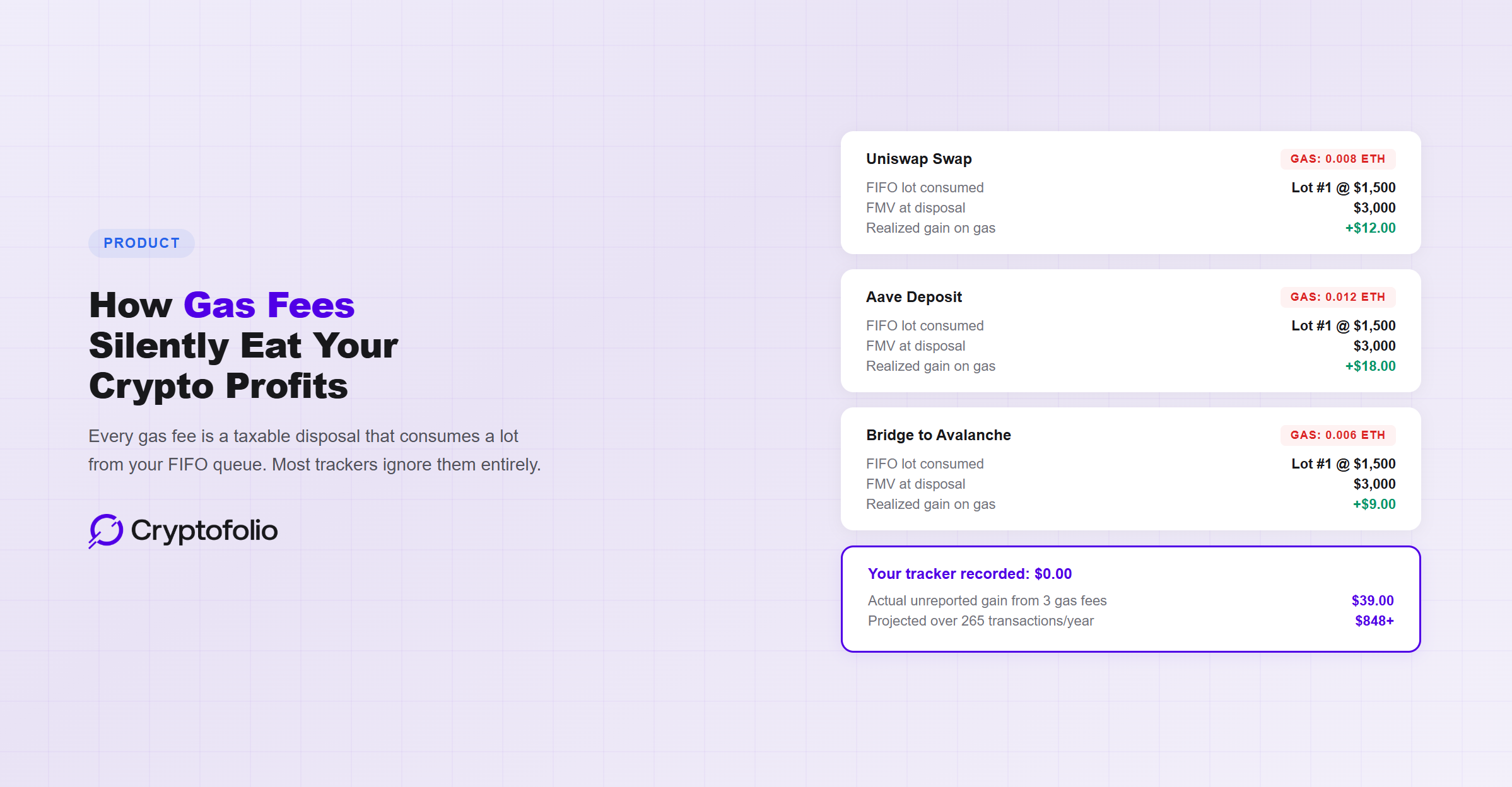
How Gas Fees Silently Eat Your Crypto Profits
Every gas fee you pay in ETH is a taxable disposal that consumes a lot from your FIFO queue. Most trackers ignore this entirely. Here's how gas fees actually affect your cost basis, your P&L, and your tax bill.
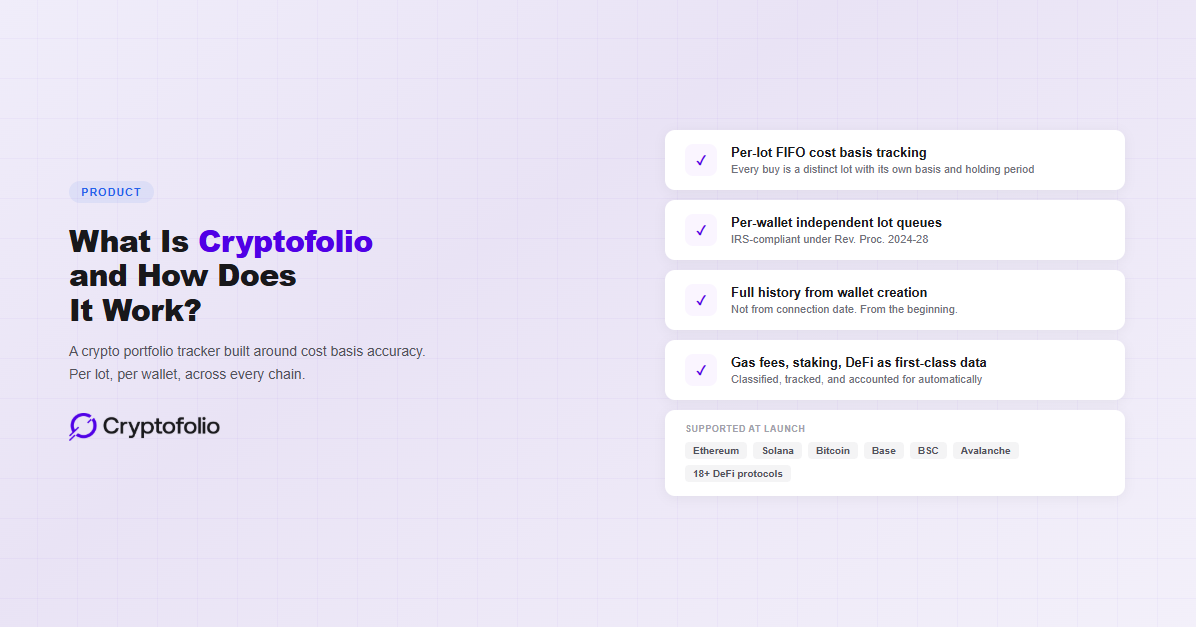
What Is Cryptofolio and How Does It Work?
Cryptofolio is a crypto portfolio tracker that maintains cost basis per lot, per wallet, across every chain. Here's how it works, what it tracks, and why it's different from balance trackers and tax tools.
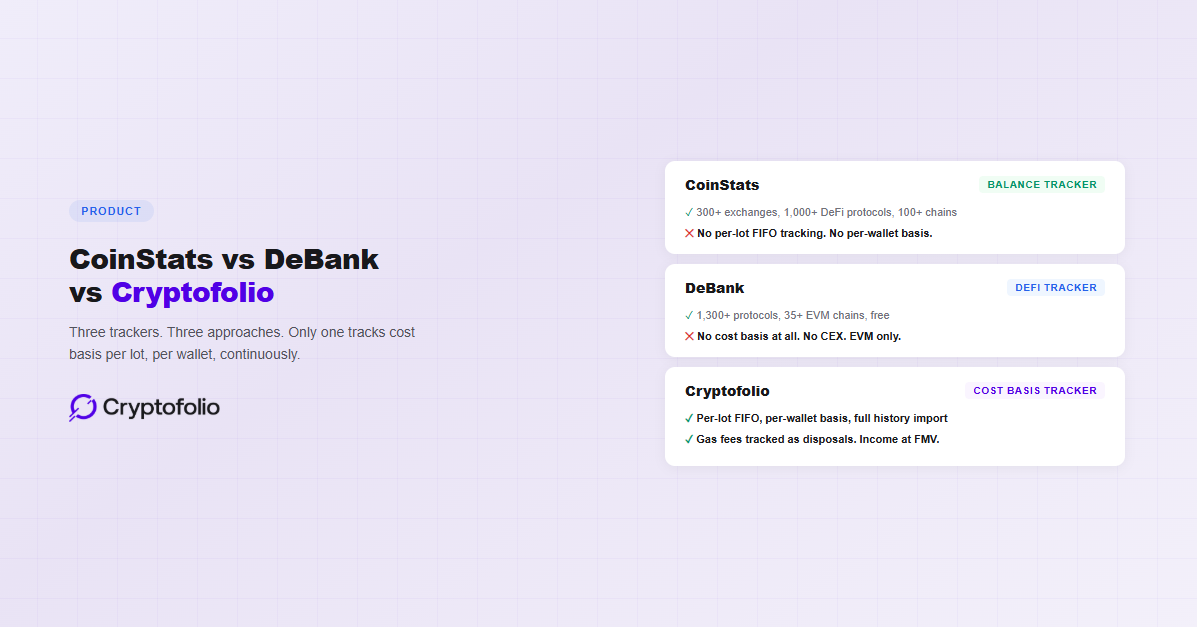
CoinStats vs DeBank vs Cryptofolio: What Each Tracker Actually Does
CoinStats tracks balances across 300+ exchanges and wallets. DeBank tracks DeFi across 1,300+ protocols. Cryptofolio tracks cost basis per lot, per wallet, across every chain. Here's what each one actually does.
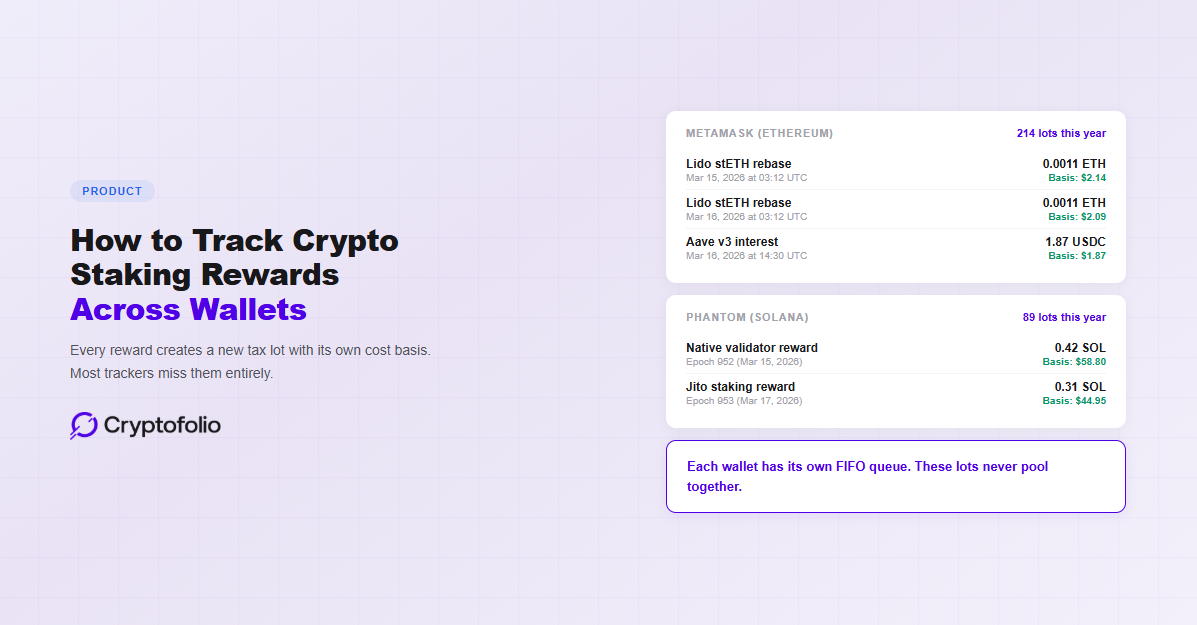
How to Track Crypto Staking Rewards Across Wallets
Every staking reward creates a new tax lot with its own cost basis and holding period. Here's why tracking them across wallets is harder than it looks, and what most trackers miss.

The Real Cost of Free Crypto Portfolio Trackers
Free crypto portfolio trackers show your balance. They don't show what you actually made. Here's what the free tiers from CoinStats, DeBank, Koinly, CoinTracker, and Summ actually include, and what they leave out.
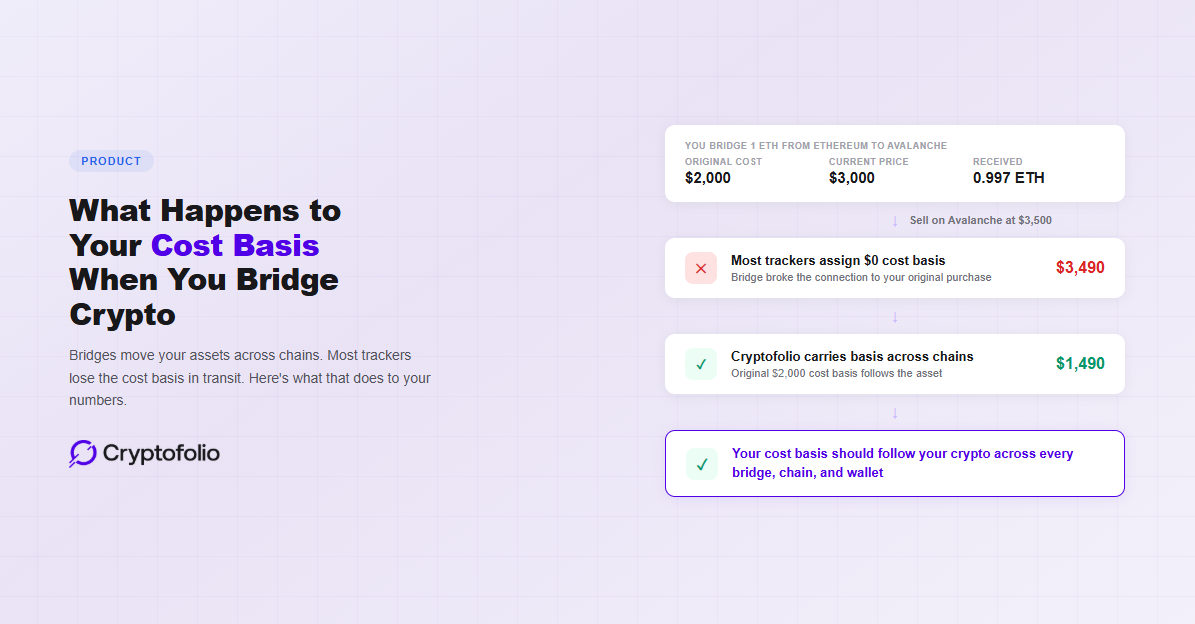
What Happens to Your Cost Basis When You Bridge Crypto
Bridging crypto between chains creates one of the messiest cost basis problems in portfolio tracking. Here's what actually happens to your numbers and why most trackers get it wrong.
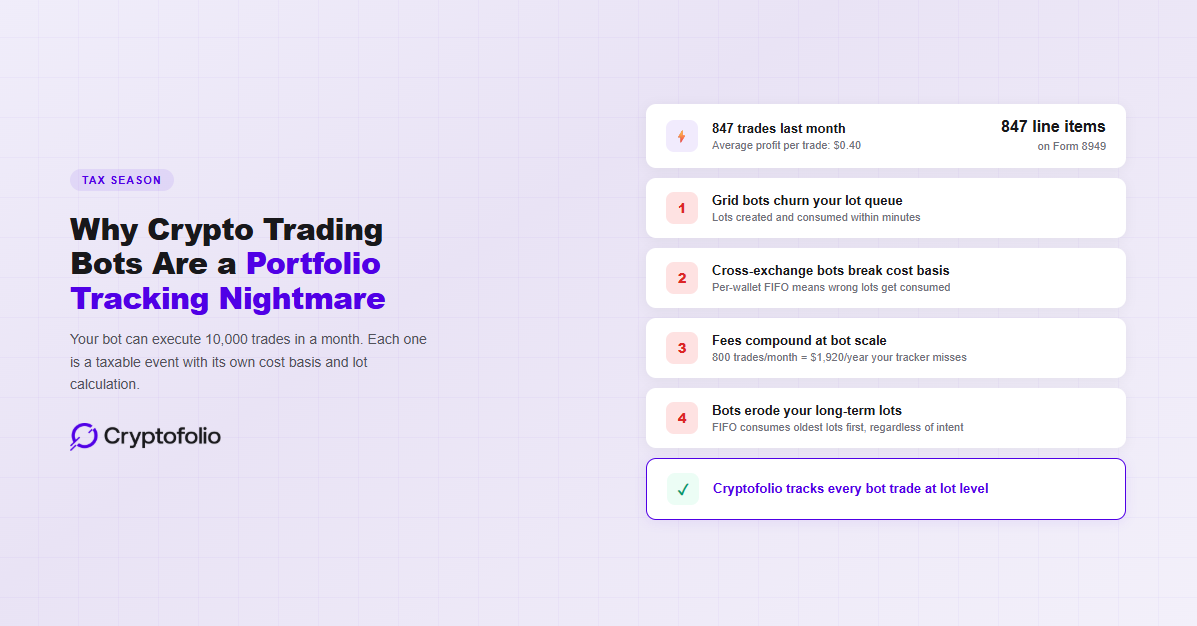
Why Crypto Trading Bots Are a Portfolio Tracking Nightmare
Your trading bot can execute 10,000 trades in a month. Each one is a taxable event with its own cost basis, lot selection, and gain calculation. Here's why most trackers can't keep up.
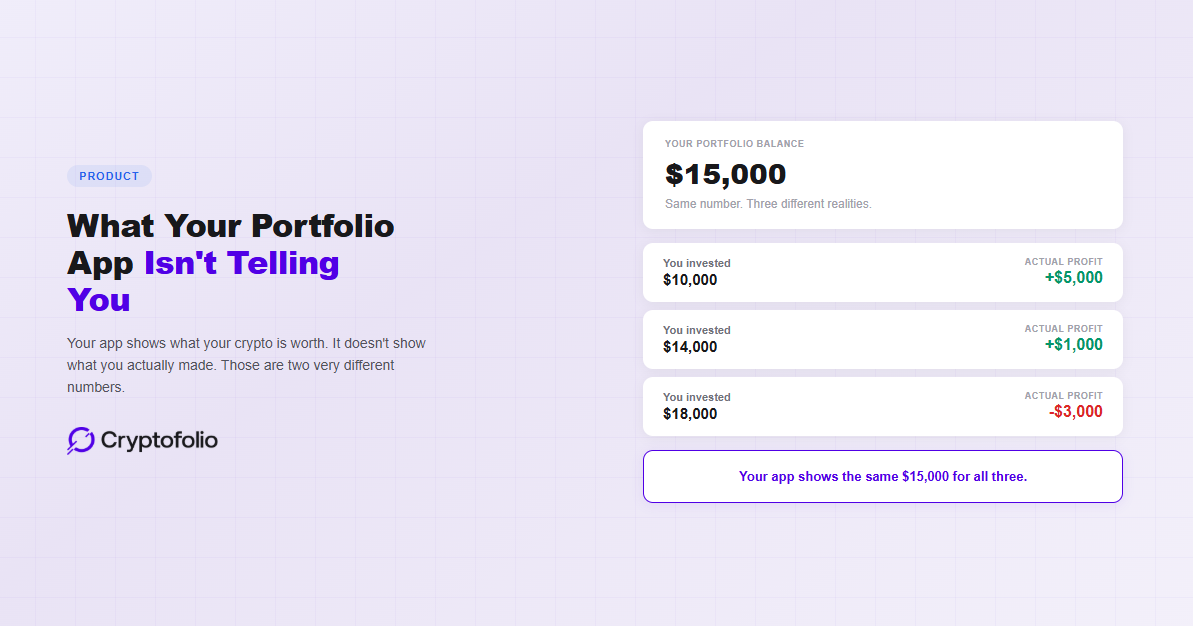
What Your Portfolio App Isn't Telling You
Your portfolio app shows what your crypto is worth. It doesn't show what you actually made. Here's why the number on your screen is misleading and what's missing.
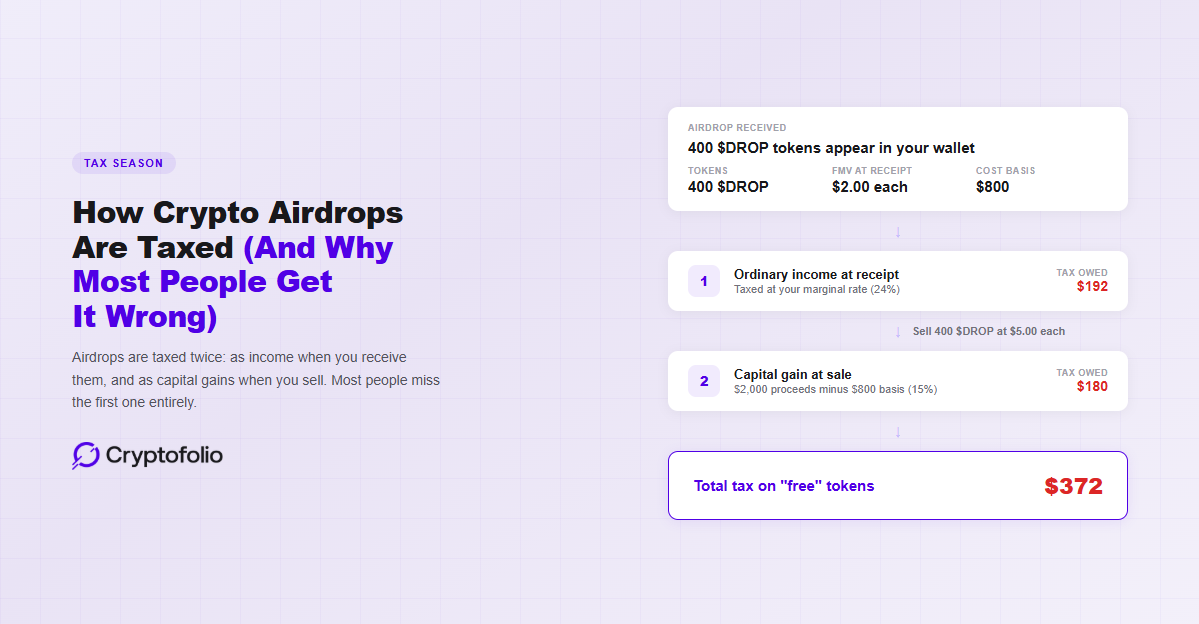
How Crypto Airdrops Are Taxed (And Why Most People Get It Wrong)
Crypto airdrops are taxed twice: once as income when you receive them, and again as capital gains when you sell. Here's how the IRS treats them, what most people miss, and how to track them correctly.
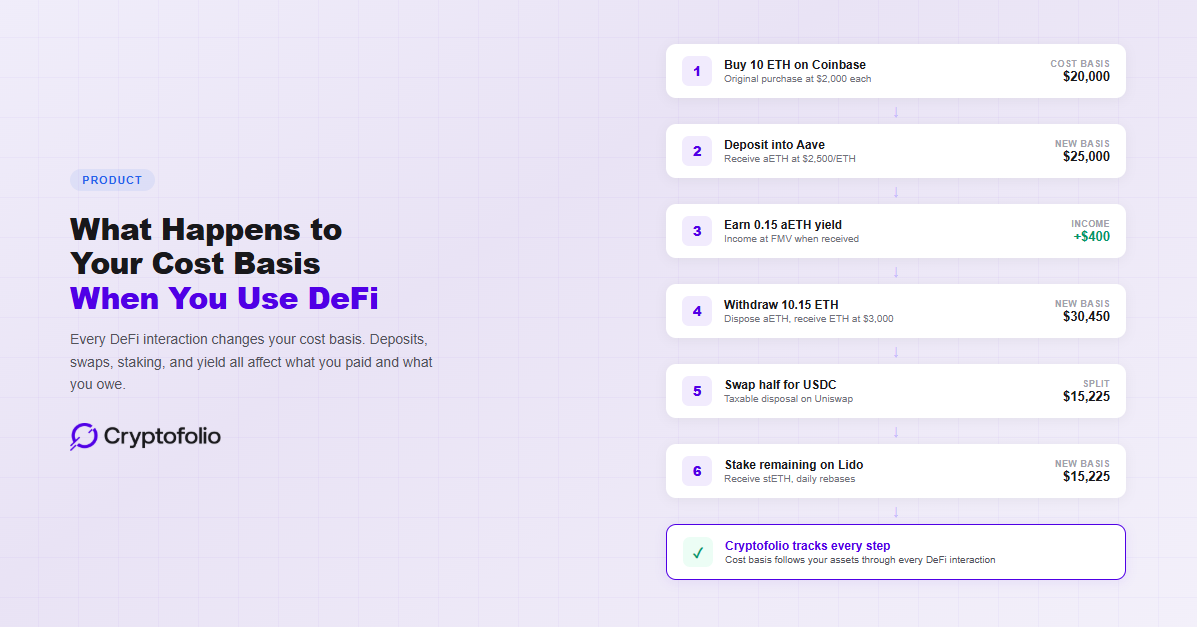
What Happens to Your Cost Basis When You Use DeFi
Every DeFi interaction changes your cost basis. Deposits, withdrawals, swaps, staking, and LP positions all affect what you paid and what you owe. Here's how.
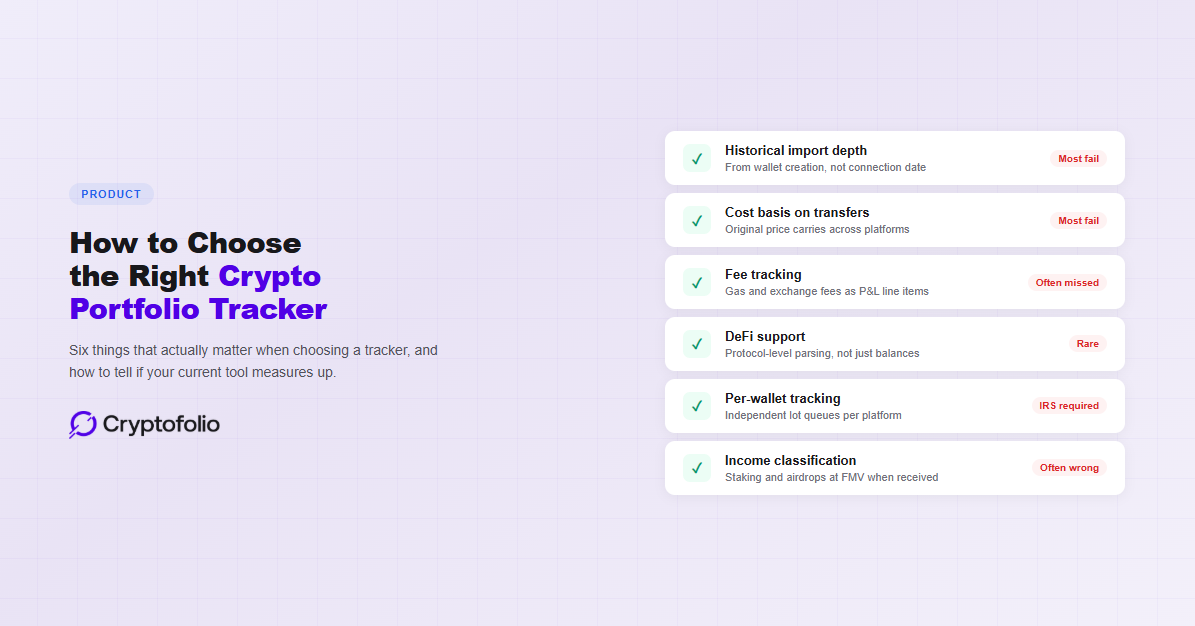
How to Choose the Right Crypto Portfolio Tracker
Not all portfolio trackers are the same. Here are the six things that actually matter when choosing one, and how to tell if your current tool measures up.
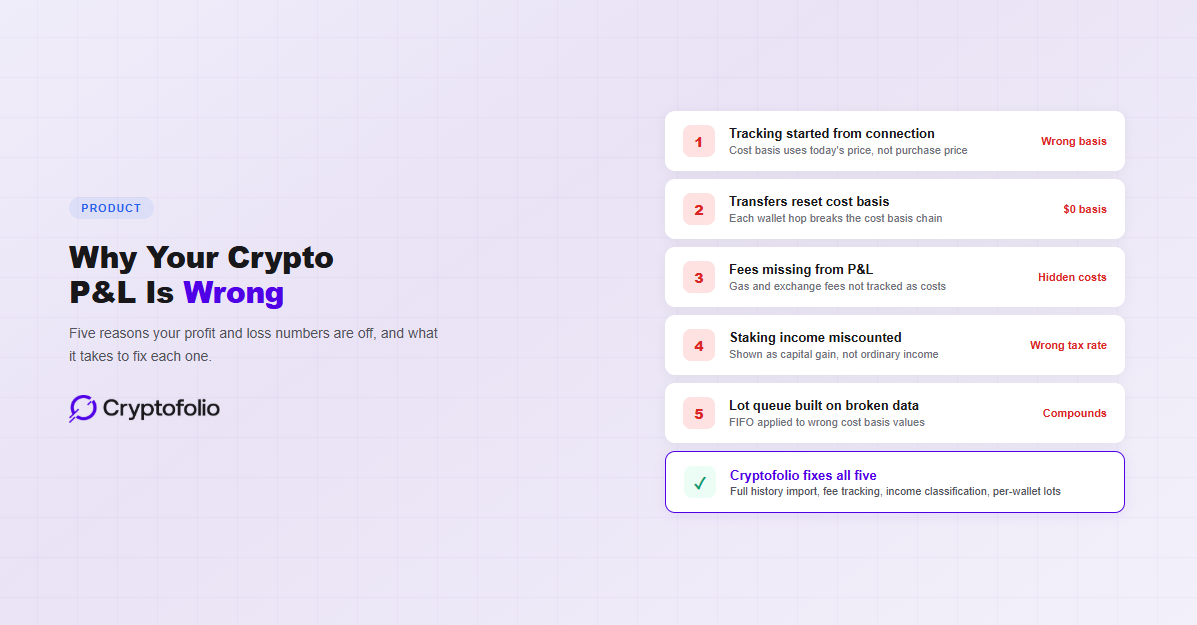
Why Your Crypto P&L Is Wrong (And How to Fix It)
Most crypto P&L numbers are wrong. Here are the five most common reasons your profit and loss calculations are off, and what it takes to fix them.
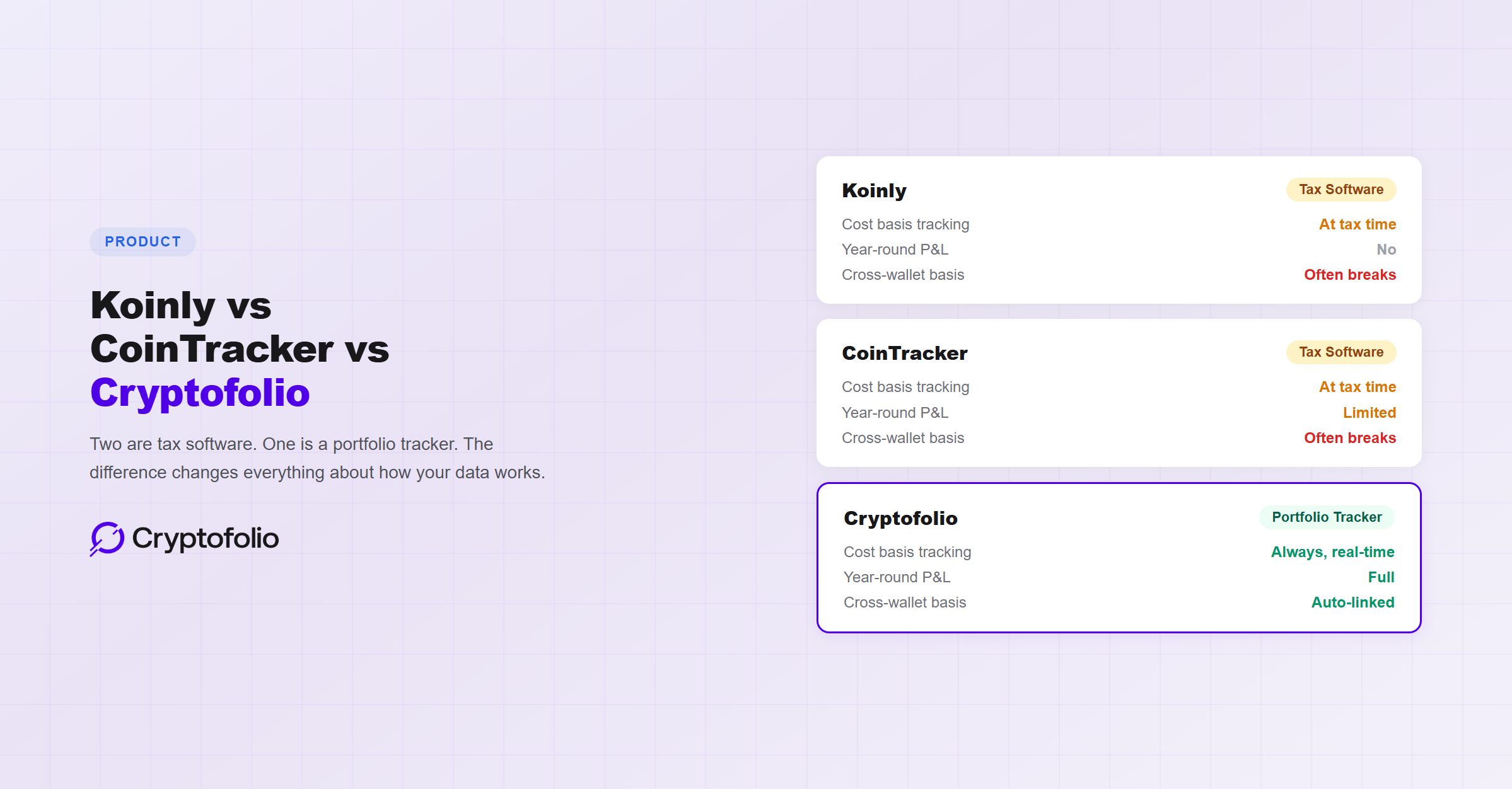
Koinly vs CoinTracker vs Cryptofolio: What's the Difference?
Koinly and CoinTracker are tax software. Cryptofolio is a portfolio tracker. Here's what each one does, where they fall short, and how to decide which one you need.
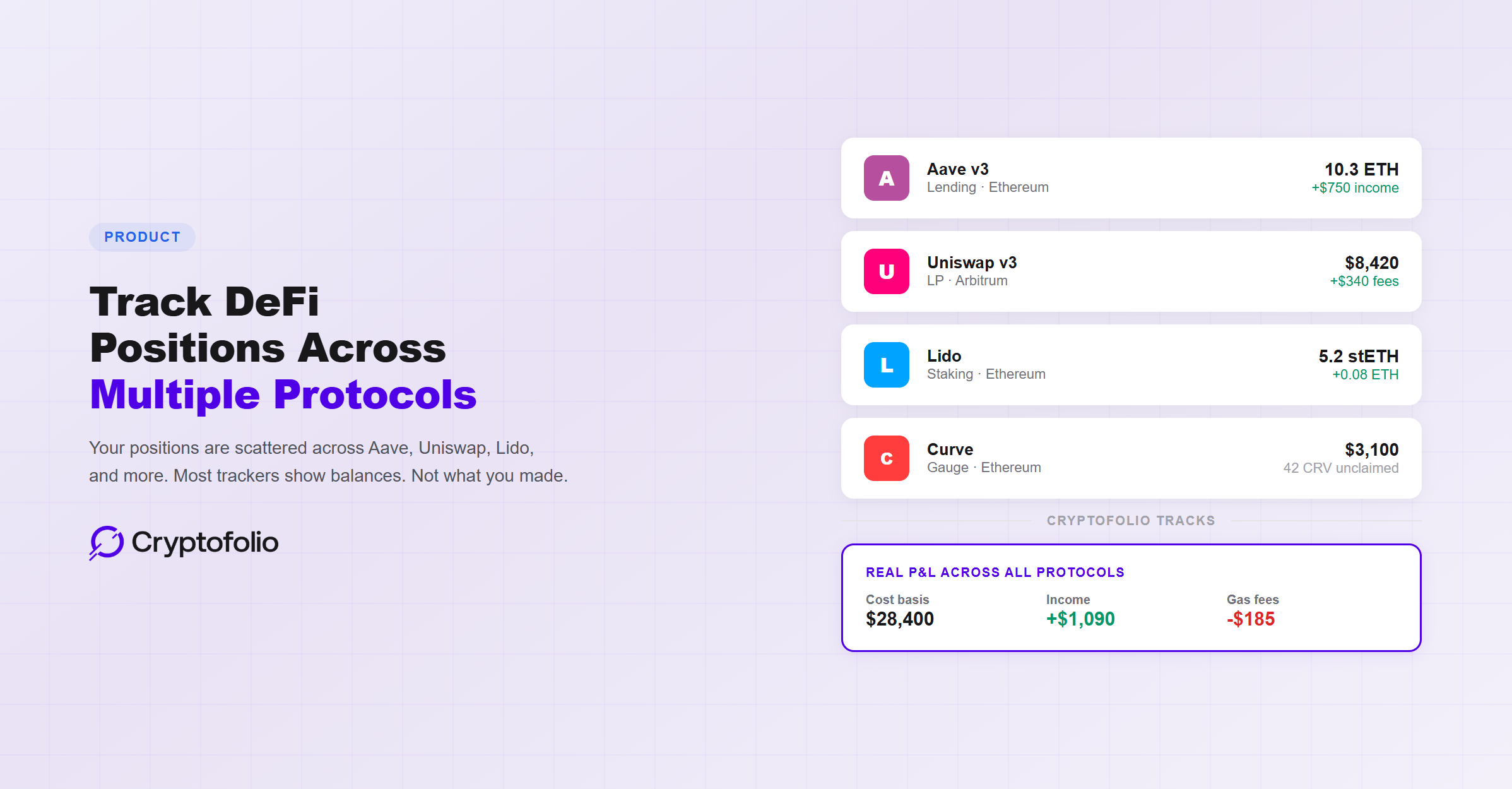
How to Track DeFi Positions Across Multiple Protocols
Your DeFi positions are scattered across Aave, Uniswap, Lido, and a dozen other protocols. Here's why most trackers miss them and what to look for in one that doesn't.
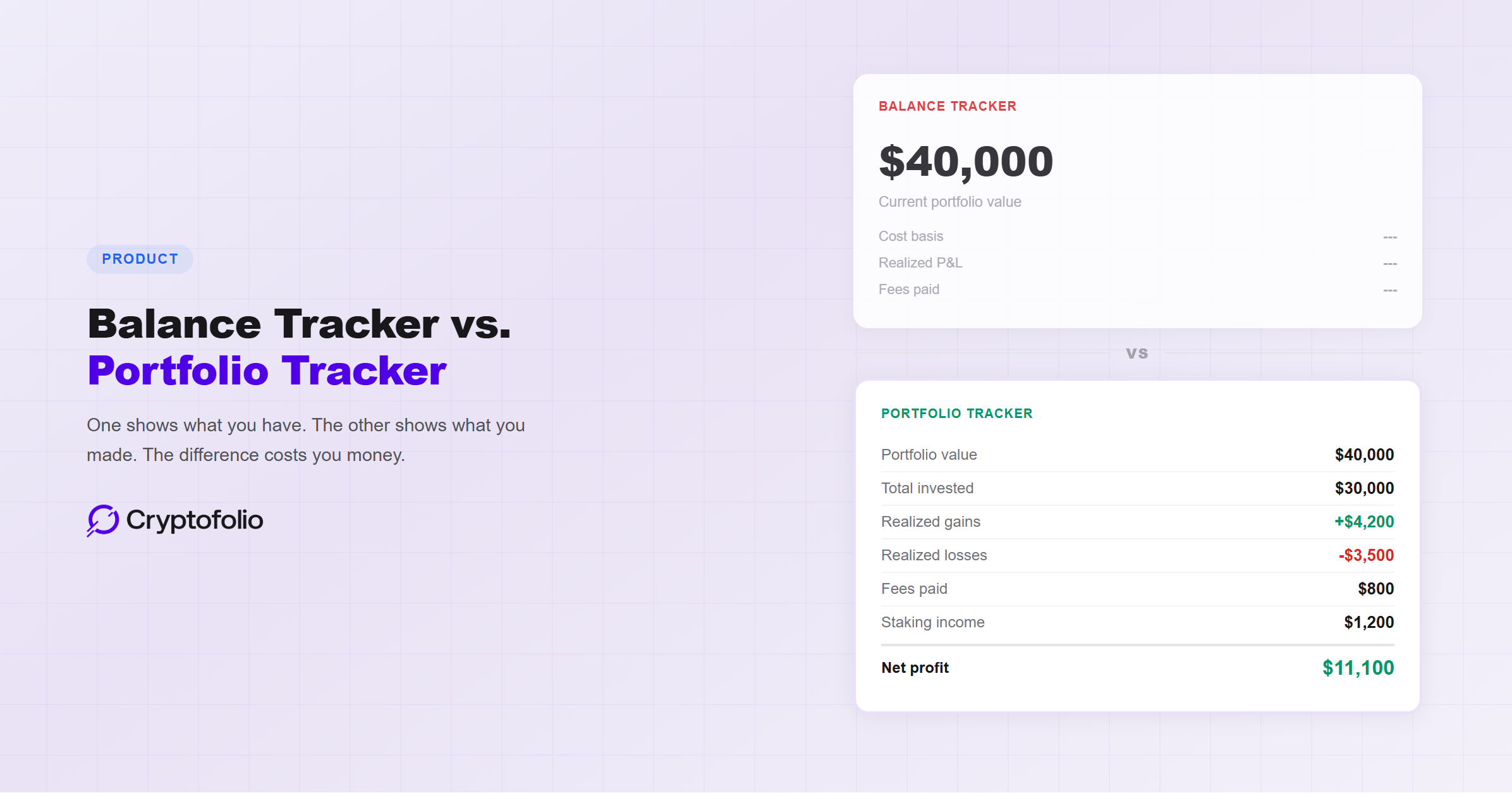
Crypto Balance Tracker vs. Portfolio Tracker: What's the Difference?
Balance trackers show your balance. A portfolio tracker shows your profit. Here's what balance trackers miss, why it matters for your taxes, and how to tell the difference.
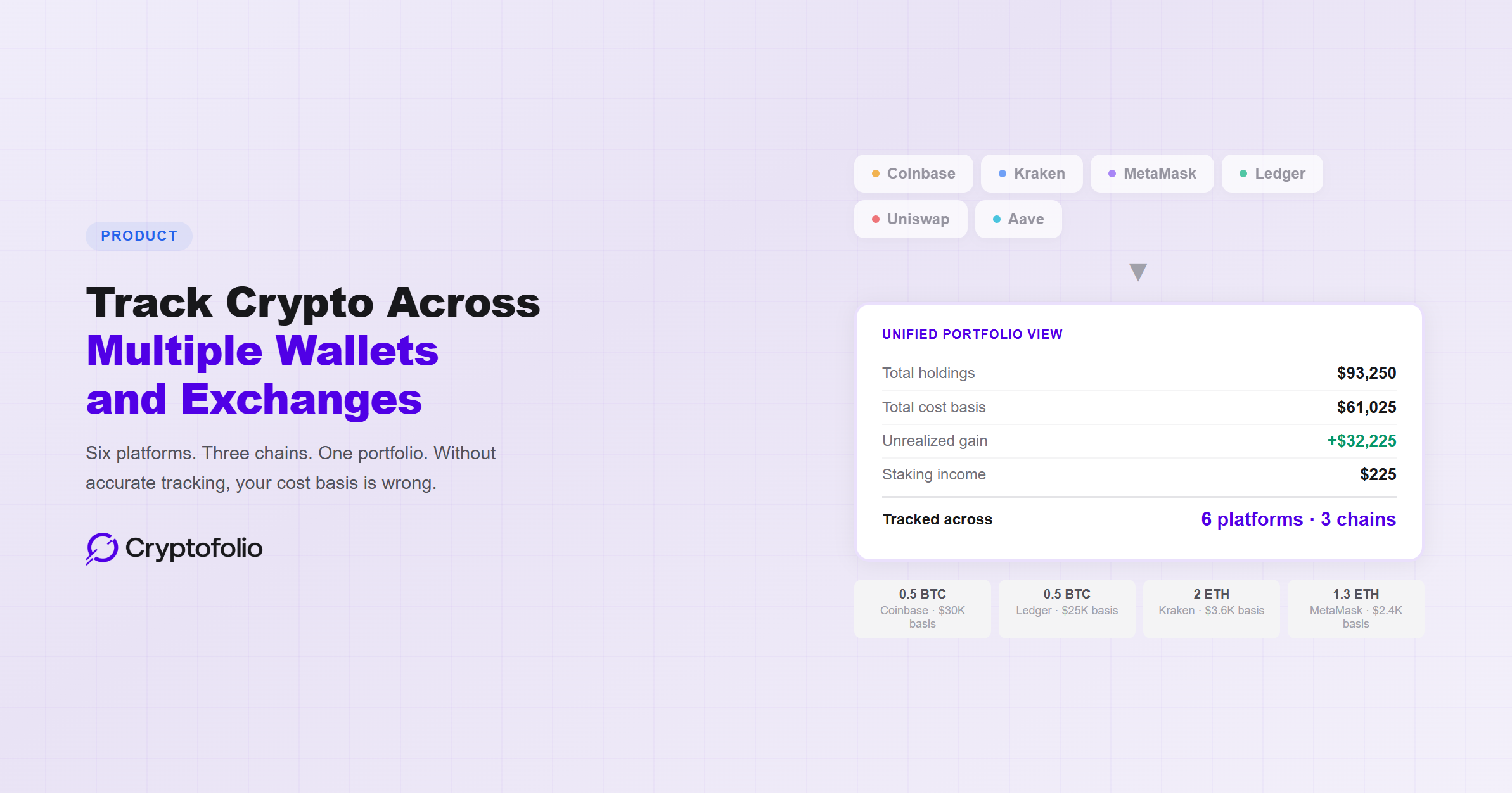
How to Track Crypto Across Multiple Wallets and Exchanges (Without Losing Your Cost Basis)
The average crypto investor uses multiple wallets and exchanges. Here's why tracking across all of them is so hard, what breaks when you try, and how to do it right.
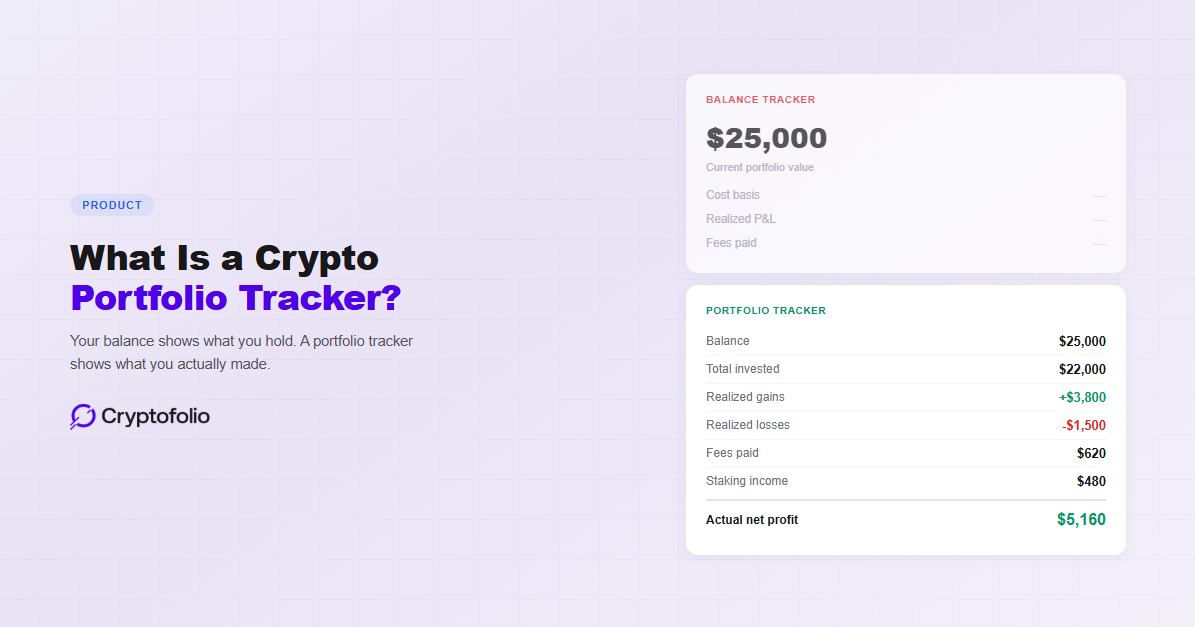
What Is a Crypto Portfolio Tracker? (And Why Balance Isn't Enough)
Most crypto apps show your balance. A real portfolio tracker shows what you actually made. Here's the difference and why it matters for your money and your taxes.

The SEC Just Classified Every Major Crypto Asset. Here's What It Means for Investors.
The SEC and CFTC jointly declared that most crypto assets are not securities. Here's the new five-category token taxonomy, which assets are classified, and what it means for your portfolio.
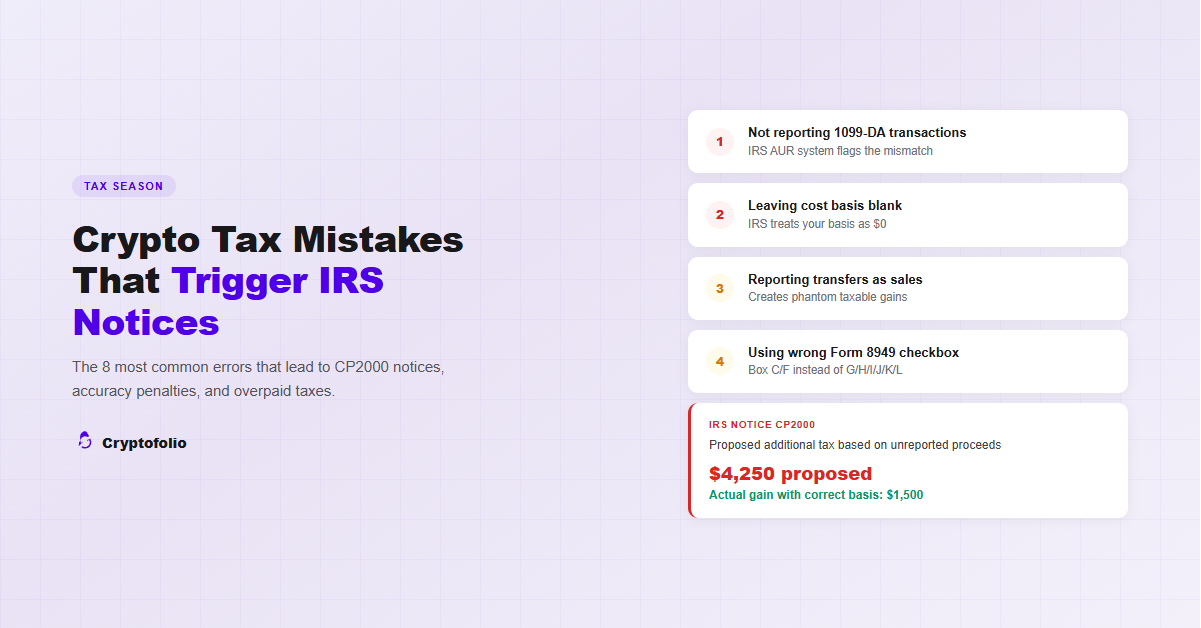
Crypto Tax Mistakes That Trigger IRS Notices (And How to Avoid Them)
The IRS is matching your 1099-DA against your tax return. These are the crypto tax mistakes that trigger CP2000 notices, accuracy penalties, and audits, and how to avoid them.
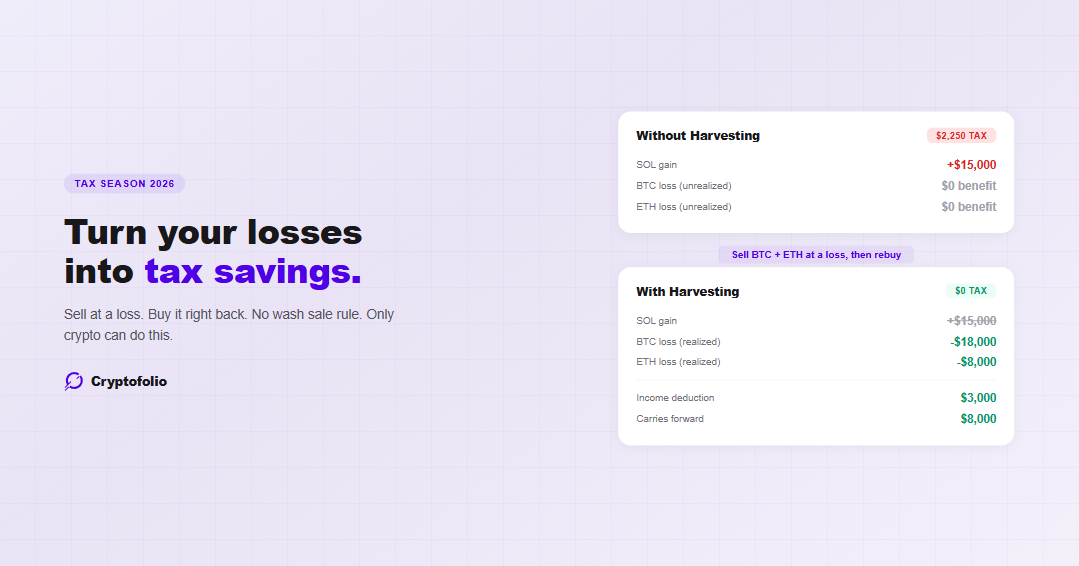
Crypto Tax-Loss Harvesting: How to Turn Losses Into Tax Savings
Crypto losses can offset capital gains and reduce your taxable income by up to $3,000 per year. Learn how tax-loss harvesting works, why crypto has a unique advantage over stocks, and how to do it right.
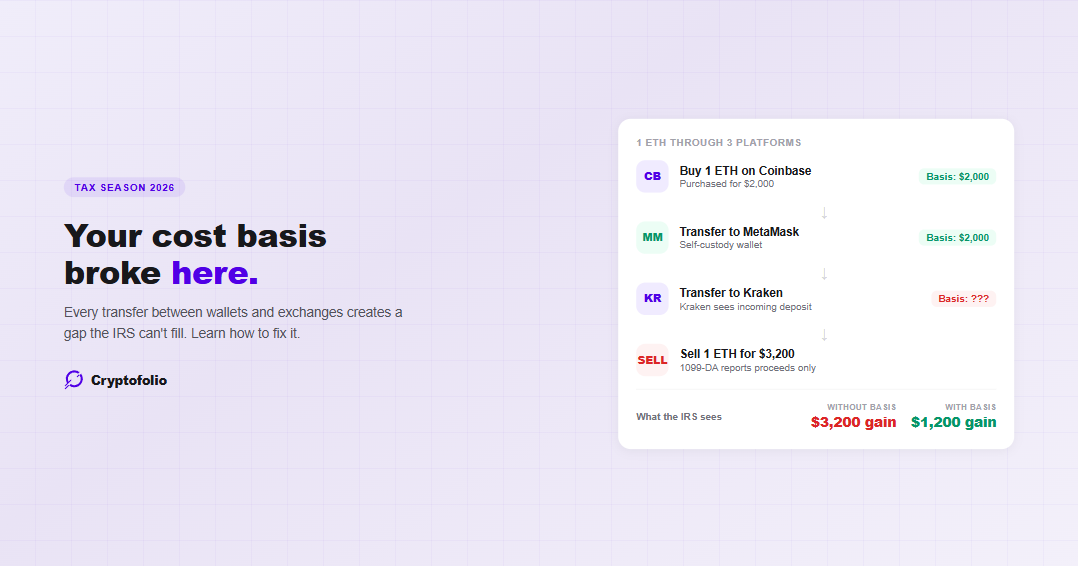
How Crypto Transfers Break Your Cost Basis (And How to Fix It)
Transferring crypto between exchanges and wallets is the #1 reason cost basis breaks. Learn why it happens, what the IRS expects, and how to keep your records intact.
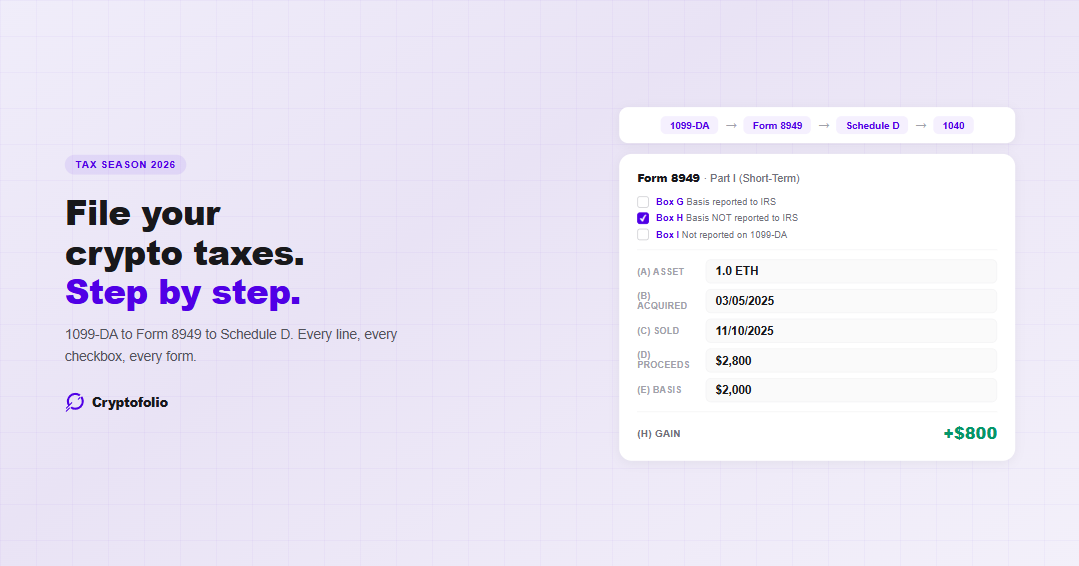
How to File Crypto Taxes Step by Step: Form 8949, Schedule D, and Your 2025 Return
A step-by-step walkthrough of filing your 2025 crypto taxes. Covers Form 1099-DA, Form 8949, Schedule D, and Form 1040, including the new digital asset checkboxes.
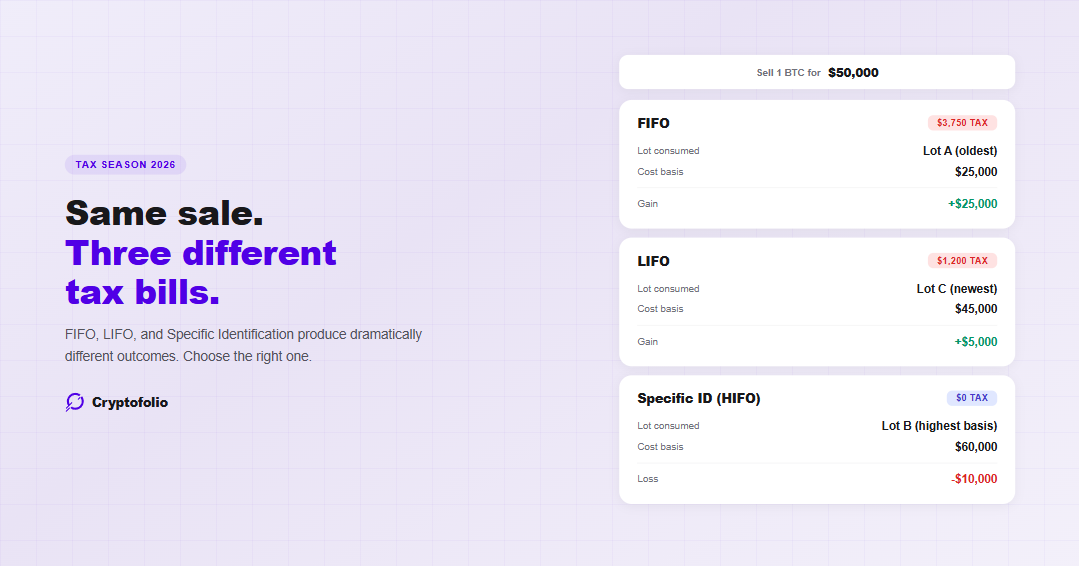
FIFO vs LIFO vs Specific Identification: Choosing the Right Crypto Tax Method
FIFO, LIFO, and Specific Identification can produce dramatically different tax bills on the same crypto transactions. Learn how each method works and which one to use.
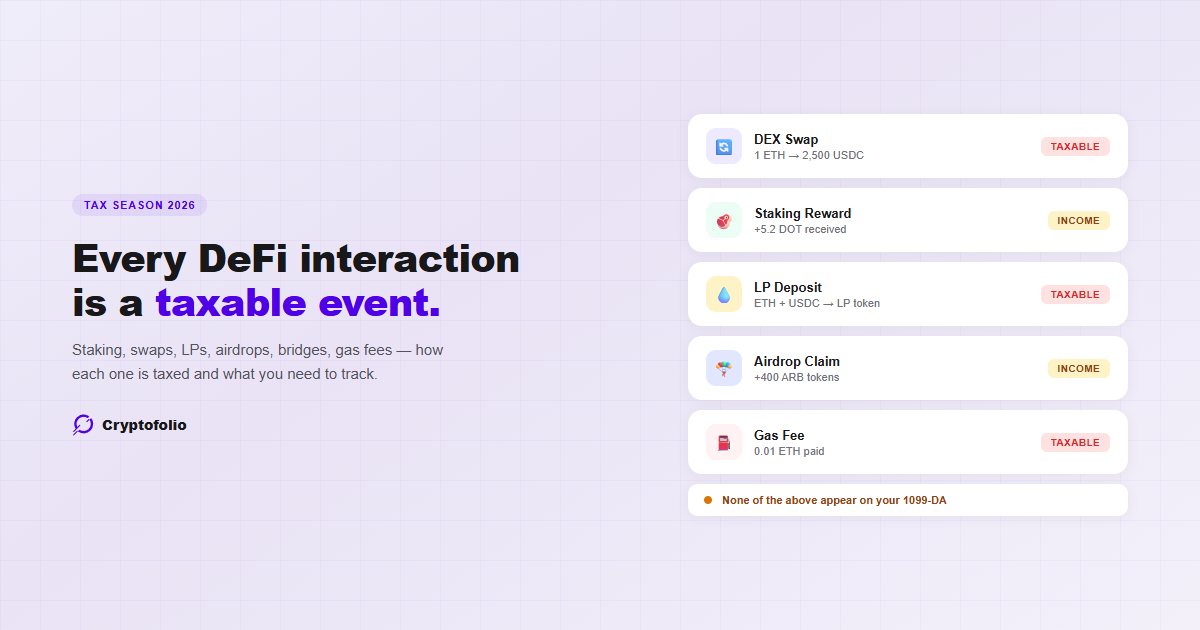
The Complete DeFi Tax Guide: Staking, Swaps, LPs, Airdrops, and More
Every DeFi interaction is a potential taxable event. Learn how staking rewards, DEX swaps, liquidity pools, airdrops, bridges, and gas fees are taxed under IRS rules.
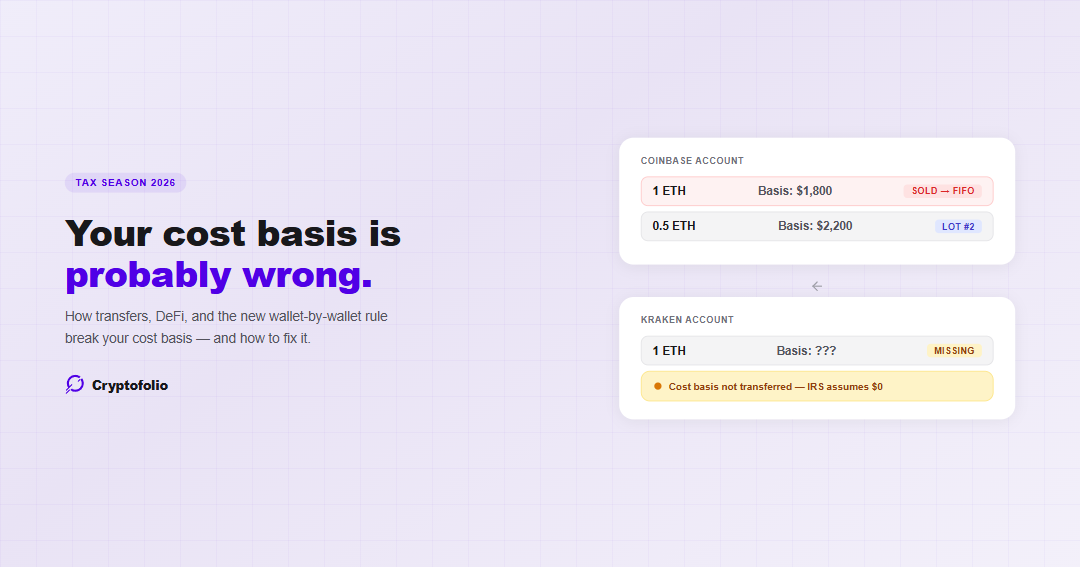
Is Your Crypto Cost Basis Wrong? How to Calculate and Fix It
Your crypto cost basis is probably wrong if you've ever transferred between exchanges or used DeFi. Learn how to calculate, track, and fix your cost basis before filing.
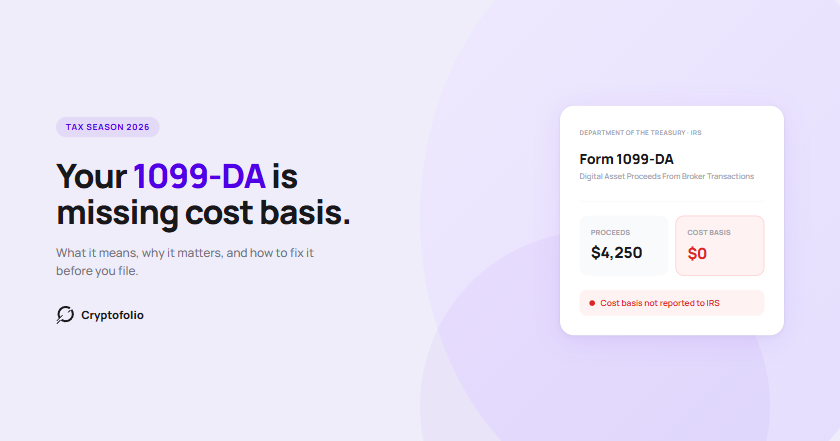
1099-DA Crypto Explained: What to Do About Missing Cost Basis
Millions of crypto investors are receiving IRS Form 1099-DA for the first time. Learn what it means, why cost basis is missing, and how to fix it before filing.